Most group transportation guides start with the question where does the bus drop off? A Big Bear Lake trip starts with a different one: can the bus make it up? The mountain is real.
State Route 330 — the main road from the Inland Empire to Big Bear Lake — is a 15-mile two-lane climb that averages a 4.9% grade, with the steepest mile hitting 7.7% and sections clocking 9.9% in individual quarter-mile pitches. At the top of SR-330, it connects to SR-18 (the Rim of the World Scenic Byway), which follows a narrow ridge into Big Bear Lake Village. Add a January snowstorm with R-1 chain controls, a peak ski crowd on a holiday weekend, and the fact that no street parking is permitted within Big Bear Lake city limits from October 14 through April 15 during snow conditions — and the question of which vehicle handles this climb, and how, becomes the entire transportation planning conversation for this trip.
Sanbernardinopartybuscompany.com connects groups in San Bernardino and across the Inland Empire with bus companies that run Big Bear Lake trips year-round — ski weekends, cabin getaways, wedding shuttles, summer mountain outings, and October Oktoberfest runs. Because this road genuinely changes what vehicle makes sense, this guide covers SR-330 and SR-18 in detail: the grade, the chain control levels that affect your timing, which vehicles handle the climb and which don't, realistic drive times from San Bernardino and beyond, and where buses drop off at Snow Summit (880 Summit Blvd, Big Bear Lake, CA 92315) and Bear Mountain (43101 Goldmine Drive, Big Bear Lake, CA 92315). Call 909-765-2140 any time for a free quote, or fill out the quick online form for pricing in about a minute.
The Road Up: SR-330, SR-18, and What the Climb Actually Looks Like
State Route 330 begins at CA-210 in Highland and runs 15.4 miles to its junction with SR-18 in Running Springs. It opens as a four-lane freeway for about a mile, narrows to a two-lane expressway for four more, and then becomes a conventional two-lane mountain highway for the remainder of the climb — the kind where the shoulder disappears and the oncoming lane is close. Three designated passing zones break up the ascent at roughly 2,200, 4,000, and 5,600 feet of elevation; between them, there is nowhere for faster traffic to go.
Wikipedia's SR-330 documentation describes "approximately 15 miles of six-percent grade road," and real-world elevation data confirms it: the full climb from the Highland valley floor to Big Bear Lake gains approximately 5,850 feet over 22.1 miles, averaging 4.9% with the steepest individual mile at 7.7% and the toughest quarter-mile pitching to 9.9%. You start around 1,000 feet above sea level and finish at 6,752.
At the top of SR-330, Running Springs hands the route to SR-18 — the Rim of the World Scenic Byway — which runs east along the ridge into Big Bear Lake Village. SR-18 is a two-lane mountain road through its entire stretch here, narrower in character than the lower section of SR-330, with the sweeping views of the San Bernardino Valley that give it its name. Together, SR-330 and SR-18 form the fastest and most-used approach to Big Bear from Los Angeles, Orange County, and the Inland Empire.
They are also, per KBHR Big Bear area radio, "the most congested" route into the valley during ski season. On a peak ski Saturday in January, the drive that takes 1 hour 10 minutes off-peak can stretch to three hours or more.
Two other main approaches are worth knowing before you route your group. SR-18 from Lucerne Valley reaches Big Bear from the desert side — looping east from Victorville through the high desert plateau before the final climb into the valley from the east. The grade is gentler, the curves more forgiving, and it bypasses SR-330 entirely, making it the preferred approach for larger or longer vehicles that face constraints on the steeper western face.
SR-38 from Redlands is historically the most scenic approach, climbing gradually through the Santa Ana River canyon — but SR-38 is currently closed due to storm damage. Always confirm current road status through the Caltrans QuickMap (updates every 30 minutes) before routing your group through Redlands. The official Big Bear Lake roads page also posts current route advisories.
| Route | Approach from… | Distance to Big Bear | Grade / terrain | Current status |
|---|---|---|---|---|
| SR-330 → SR-18 (Highland) | LA, OC, Inland Empire via CA-210 | ~39 miles from Highland | Steep — 4.9% avg grade, 7.7% steepest mile; two-lane for most of the climb | Open |
| SR-18 (Lucerne Valley / desert side) | Victorville via I-15 / CA-247 | ~60 miles from Victorville | Gentler grade; high-desert plateau approach; wider roads through most of the run | Open |
| SR-38 (Redlands) | I-10 East via Redlands | ~35 miles from Redlands | Most gradual climb; scenic Santa Ana River canyon route | Currently closed — check Caltrans QuickMap |
Charter Bus and Party Bus Options for Big Bear Lake — Which Vehicle Handles the Mountain?
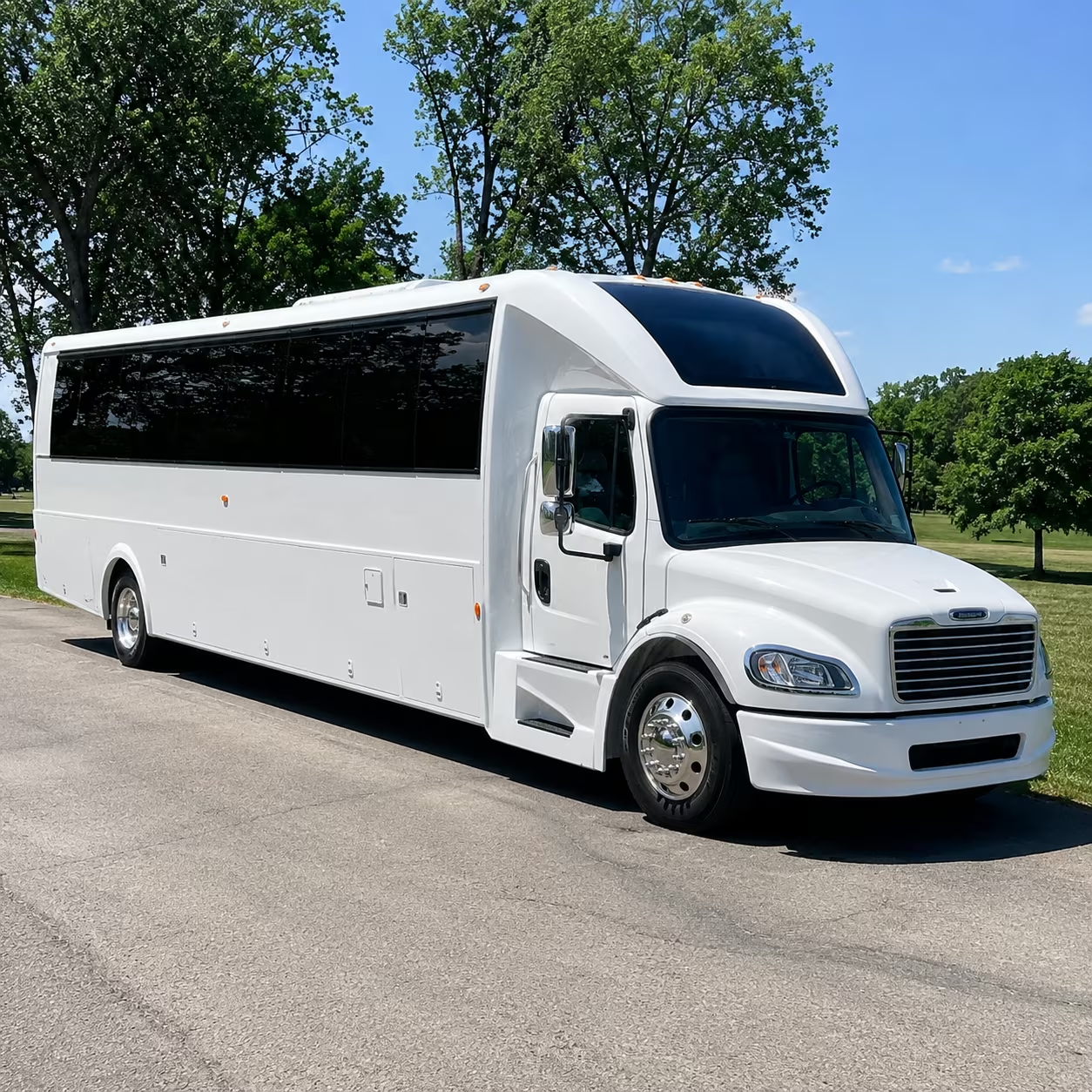
The honest part most group transportation sites skip: the standard full-size motorcoach — the 45-foot charter bus that handles a stadium run or a convention transfer without a second thought — is not always the right vehicle for SR-330. Big Bear Mountain Resort's own transportation page is direct about it: "CHP and CalTrans do not allow vehicles over 40' in length on some roads," linking to the Caltrans route restriction documentation for this area. At 45 feet, a full-size motorcoach clears that threshold.
The combination of vehicle length, tight curves on the upper mountain, minimal passing shoulder, and turning radius creates real constraints on SR-330 that simply do not exist on a valley freeway.
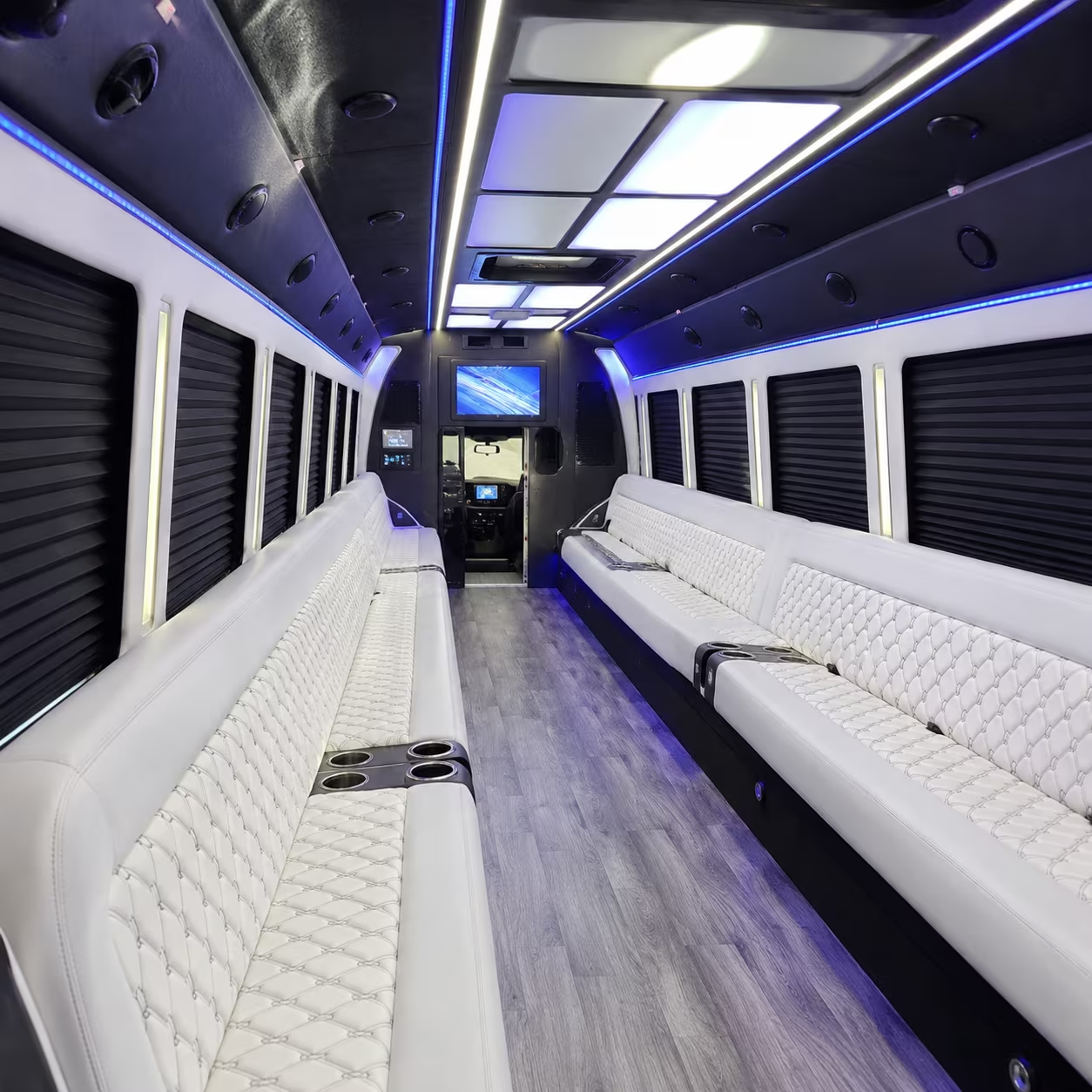
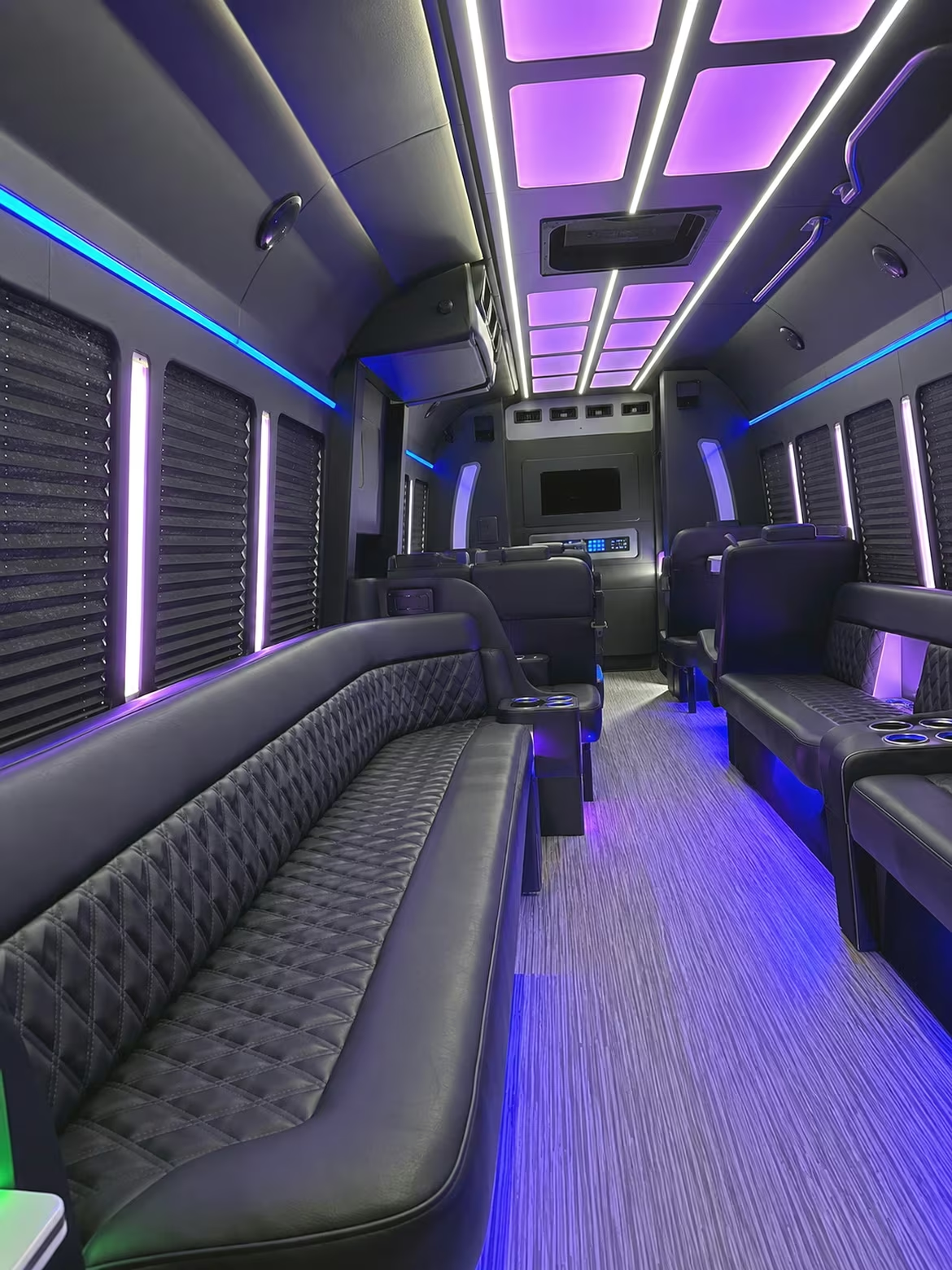
For the vast majority of Big Bear groups, the right vehicle is a 15-to-35-passenger minibus. Minibuses typically run under 35 feet — well inside the road's practical limits — and carry 15 to 35 people comfortably with climate control, reclining seats, and overhead storage for ski bags and weekend gear. For groups of 15 to 25 who want party-bus amenities on the ride up, a mid-size 25-passenger party bus is also a workable option; at roughly 30 feet it's far more manageable on the switchbacks than a full-size coach, and the cabin makes the mountain drive part of the trip rather than just the commute.
Browse the full vehicle lineup to find what fits your headcount — and when you request your quote, mention the SR-330 approach so the bus company can confirm the vehicle is matched to the road.
Groups that genuinely need 40 or more seats have two reasonable options: route the full-size coach via the SR-18 Lucerne Valley approach — the gentler grade and wider curves from the desert side make it a more appropriate route for larger vehicles — or split into two minibuses and coordinate the timing. Splitting two 20-to-25-person minibuses is often more flexible and more affordable than a single large coach for this particular run, and it gives you redundancy if chain controls add time on one vehicle. Call 909-765-2140 to talk through both options for your group size and get pricing on each.
| Vehicle | Typical length | Passengers | SR-330 fit | Big Bear use case |
|---|---|---|---|---|
| 15–35 passenger minibus | 25–35 ft | 15–35 | Best fit — handles the curves and grade well | Ski day trips, cabin weekends, wedding shuttles in the valley |
| 25-passenger party bus | ~30 ft | Up to 25 | Generally manageable — confirm vehicle length when quoting | Ski groups wanting amenities on the ride up |
| 40–56 passenger charter bus | 40–45 ft | 40–56 | 45-ft coaches face Caltrans restrictions; use Lucerne Valley approach or split into two minibuses | Large corporate or club groups — route via SR-18 east from Victorville |
The minibus is the right vehicle for SR-330. It handles the grade, navigates the curves, fits the passenger count most Big Bear groups need, and comes in well under the vehicle-length threshold Caltrans flags for some mountain road segments. Confirm your vehicle's length when you request a quote — that one detail changes the entire route plan.
Chain Control on SR-330 and SR-18: What Your Group Needs to Know Before Winter
Chain controls on SR-330 and SR-18 go into effect multiple times every winter season — sometimes multiple times in a single week during a heavy storm cycle. California law requires every vehicle traveling to Big Bear Lake to carry tire chains from November 1 through April, regardless of whether a restriction is currently active. When a control level goes live, the speed limit on the affected segment drops to 25–30 mph.
On a road that already takes 1 hour 10 minutes off-peak, a 25 mph speed restriction on two-lane switchbacks adds 45 minutes to an hour above normal congestion delays. Plan your departure buffer accordingly — the mountain does not care about your lift reservation time.
The four restriction levels, per the official Big Bear Lake winter driving safety guide and the Discover Big Bear Lake chain requirements page:
- W (Watch): No chain installation required yet. Snow is possible on the pavement and conditions can change without much notice.
- R-1: Chains required on commercial vehicles. Passenger cars and light trucks under 6,000 lbs with snow tires on drive wheels may be exempt. A chartered minibus or bus is a commercial vehicle — at R-1, chains go on.
- R-2: Chains required on all vehicles except 4WD/AWD with snow-rated tires on all four wheels. Commercial vehicles are not exempt under R-2.
- R-3: Chains required on all vehicles, no exceptions — including 4WD, AWD, and vehicles with full snow tires. CHP can turn vehicles back at chain control checkpoints if traction devices do not meet California Vehicle Code requirements.
Check Caltrans QuickMap the morning of your trip — it updates every 30 minutes and shows the current restriction level for each highway segment. You can also check KBHR Big Bear road conditions for real-time local updates. Big Bear Mountain Resort maintains a road condition updates page that pulls directly from Caltrans as well.
Here is what chain control means specifically for a group on a bus: when the restriction goes active, the chains go on the vehicle outside while your group stays in a warm, climate-controlled cabin. Nobody in your group is kneeling on a wet SR-330 shoulder in the dark trying to install chains for the first time. The road stress falls entirely on the vehicle, not on you.
That single fact tips the calculation toward a bus for a lot of winter Big Bear groups who otherwise might split into individual cars and figure it out themselves.
Realistic Drive Times to Big Bear Lake from San Bernardino and the Inland Empire
The numbers below reflect off-peak, dry-road conditions. Ski season weekends — especially the stretch from Thanksgiving through Presidents Day Weekend and any holiday weekend in between — routinely double or triple the off-peak figures. Build a real buffer for any winter weekend departure, and depart earlier than feels necessary on a ski Saturday.
| From… | Route | Approx. distance | Off-peak drive time | Peak ski weekend |
|---|---|---|---|---|
| Highland / San Bernardino | SR-330 → SR-18 | ~39 miles | ~1 hr 10 min | 2–3 hours |
| Rancho Cucamonga / Ontario | SR-210 E → SR-330 → SR-18 | ~45 miles | ~1 hr 15 min | 2–3 hours |
| Riverside | SR-91 W → SR-210 → SR-330 | ~55 miles | ~1 hr 30 min | 2.5–3.5 hours |
| Los Angeles (downtown) | I-10 E → SR-210 → SR-330 | ~100 miles | ~2 hours | 3.5–4+ hours |
| Orange County | CA-91 E → SR-210 → SR-330 | ~110 miles | ~2.5 hours | 3.5–4.5 hours |
| San Diego | I-15 N → SR-210 → SR-330 | ~150 miles | ~3 hours | 4–5 hours |
Groups leaving from San Bernardino or the Inland Empire are the best positioned for a day trip. Under 90 minutes off-peak puts Big Bear Lake within reach for a morning departure without a 5 AM alarm. For LA and Orange County groups on a ski Saturday, the realistic choices are either a Friday afternoon departure (ahead of the evening traffic surge), booking an overnight in Big Bear Lake to skip the ski-day gridlock entirely, or departing by 7 AM on Saturday morning before SR-330 saturates.
On a bus, that 3.5-to-4-hour LA trip is far more manageable than four separate cars all navigating the same crawl up the mountain — everyone is in one place, the planning stops at the curb when the bus leaves, and the mountain is somebody else's route problem.
Charter Bus and Party Bus Drop-Off at Snow Summit and Bear Mountain
Once the bus crests the mountain and reaches Big Bear Lake, the drop-off is straightforward. Snow Summit (880 Summit Blvd, Big Bear Lake, CA 92315) is accessible off Summit Boulevard on the south side of the lake, with a guest drop-off area for loading and unloading at the base. Bear Mountain (43101 Goldmine Drive, Big Bear Lake, CA 92315) sits in the Moonridge neighborhood southeast of the lake, base lot access off Goldmine Drive.
Both resorts offer real-time parking availability through the Big Bear Mountain Resort mobile app, so you can check whether the base lot is full before you pull in and know which overflow lot the vehicle should head to after dropping the group. Full parking details are on the Big Bear Mountain Resort transportation page.
On peak ski days, base lot parking at both resorts fills early. The resort operates overflow shuttle lots when the base is at capacity: Sandalwood (near Big Bear Blvd and Fox Farm Road, approximately 10 minutes to Snow Summit), Fox Farm, Brownie (Snow Summit-side, opens after Sandalwood and Fox Farm fill), and Moonridge (closest to Bear Mountain, roughly a 5-minute shuttle ride to the base). Shuttle buses from the overflow lots run to the base areas throughout the ski day.
Oversized vehicles may have limited access to some lots — confirm bus parking arrangements directly with the resort before your visit, especially on holiday weekends.
The practical advantage of a bus for a ski group is the sequence: the vehicle drops everyone at the Snow Summit or Bear Mountain base area first, your whole group walks to the lifts together, and the vehicle stages separately. Nobody in your group sits in a parking lot shuttle waiting to reach the base while the early skiers are already in the lift line. During the ski day, if part of your group wants to hit both mountains, Mountain Transit's free Red Line trolley connects Snow Summit and Bear Mountain every 30 minutes — they can switch mountains on the trolley while the bus stays staged elsewhere.
Current schedules are on the Mountain Transit free trolley page.
One parking rule every Big Bear group should know: no street parking is permitted within Big Bear Lake city limits from October 14 through April 15 during snow conditions. A bus cannot simply park on a side street near the village while your group gears up or grabs lunch. A confirmed lot arrangement or a staged remote-lot plan is the only option on a snow day — which is one more logistical detail to have sorted before you're standing on the mountain trying to figure it out.
Big Bear Lake Minibus and Party Bus Rental Prices
Rental pricing for a Big Bear Lake trip shifts based on vehicle size, how many hours the bus is reserved, the specific date, and your pickup location. To give you a planning baseline: a 15-to-35-passenger minibus — the right vehicle for SR-330 — runs in the range of $200–$250 per hour on weekdays or $200–$275 per hour on weekends, and roughly $1,100–$2,150 for a full-day booking. A mid-size party bus in the 25-passenger range runs $250–$375 per hour on weekends, or $1,850–$2,900 for a full day.
Peak ski weekends in January and February tend to run toward the higher end of those ranges; a September cabin trip on a Tuesday sits at the lower end. Those are planning ranges, not a quote — real pricing moves with your date, the exact vehicle, and total hours. Check the San Bernardino party bus prices page for more detail, or call 909-765-2140 any time — pricing for your specific trip takes about a minute to pull up.
Run the per-person math against the alternative. A 20-passenger minibus for a San Bernardino ski day — roughly 9 hours total covering the drive up, time on the mountain, and the drive back — comes to something in the range of $1,800–$2,250 for the full booking. Split across 20 people, that's approximately $90–$115 per person for round-trip transportation with no parking scramble, no designated-driver math, and no one navigating the SR-330 descent in the dark after a full day on the slopes.
Compared with four cars each paying for gas, each needing a lot-parking pass, and each requiring at least one person who cannot fully participate in the day because they are driving home on an icy mountain road — the bus math tends to get more compelling the more honest the comparison gets.
Cabin Weekends, Weddings, and Summer Group Trips — Rent a Bus to Big Bear Lake Year-Round
Ski season runs December through March or April, but Big Bear Lake draws groups year-round and the transportation case does not change by season. Summer brings lift-served mountain biking at Snow Summit's Gravity Bike Park, kayaking and paddleboarding on the lake, and a full calendar of hiking trails in the San Bernardino National Forest. The Big Bear Lake Oktoberfest, held at the Big Bear Events Center each weekend in October, is one of the longest-running Oktoberfest celebrations in California, drawing large groups from across Southern California for live music, traditional food, and mountain air that is genuinely different from anything in the valley.
A minibus from San Bernardino for an October Oktoberfest weekend is a natural fit — the winter parking restrictions are not yet in full effect, the mountain roads carry lighter traffic than ski season, and a bus still removes the designated-driver question and keeps the whole group together from the valley up and back.
Cabin weekend groups are where the bus case is sharpest. When your group is booking four or five cabins for a Friday-through-Sunday trip, the car-coordination conversation starts before anyone even packs — who leaves when, who rides with whom, who has the ski bag, what happens when the first car gets stuck in the chain control checkpoint and everyone else is already at the cabin. A minibus from one pickup point in San Bernardino or Rancho Cucamonga handles all of it: everyone loads together, arrives at the cabin at the same time, and the Sunday afternoon descent on SR-330 is not something any one person in your group has to navigate while the rest of the group naps.
That descent, after a full mountain weekend, matters as much as the trip up.
Weddings at Big Bear Lake are a growing category, and the transportation gap for out-of-town guests is a genuine planning problem. Guests flying into Ontario International Airport (ONT), roughly 45 miles from Big Bear Lake, who have never driven SR-330 should not be asked to navigate a steep, winding two-lane mountain road — potentially in February conditions — on the way to a wedding. A dedicated wedding shuttle bus picks guests up from hotel blocks in the valley, handles the mountain climb, and delivers everyone to the venue together.
The return trip after the reception — after dark, after dinner, on a road with switchbacks and possible icy patches — is the part most wedding couples do not fully think through until it is almost too late. A bus handles it, and guests get home without anyone having to navigate those mountain roads after dark. If your group is flying into ONT before heading up the mountain, the Ontario airport transportation guide covers the ground pickup details at ONT.
Call 909-765-2140 to talk through what a Big Bear wedding shuttle looks like for your specific guest count and hotel situation.
Frequently Asked Questions About Renting a Charter Bus or Party Bus to Big Bear Lake
Can a full-size charter bus drive SR-330 to Big Bear Lake?
Full-size 45-foot motorcoaches face Caltrans vehicle-length restrictions on some mountain road segments in this area — Big Bear Mountain Resort's transportation page notes directly that "CHP and CalTrans do not allow vehicles over 40' in length on some roads." For groups that need 40 or more seats in a single vehicle, the better route is the SR-18 approach from Lucerne Valley, which has a more gradual grade and wider road geometry than SR-330. Most Big Bear groups are better served by a 15-to-35-passenger minibus on SR-330, which handles the climb without the length or turning-radius constraints of a full-size coach.
Confirm your vehicle's length when you request a quote so the routing can be planned correctly.
How long does the drive from San Bernardino to Big Bear Lake take?
About 1 hour and 10 minutes via SR-330 and SR-18, covering roughly 39 miles — under dry, off-peak conditions. On a peak ski Saturday in January, that same route regularly runs 2.5 to 3 hours. If chain controls are active and the speed limit on SR-330 drops to 25–30 mph, add another 45 minutes to an hour on top of normal congestion.
Plan your departure time around the worst realistic scenario, not the best-case GPS estimate.
What happens to our group's schedule if chain controls go into effect?
At R-1, commercial vehicles — which includes any chartered minibus or bus — must have chains installed, regardless of whether the vehicle has 4WD. At R-3, all vehicles including 4WDs are required to chain up with no exceptions. The speed limit under chain control drops to 25–30 mph on the affected segment, and CHP can turn vehicles back at checkpoints if traction devices do not meet California Vehicle Code requirements.
Check Caltrans QuickMap the morning of your trip and build at least a one-hour buffer beyond your normal expected drive time any time winter conditions are possible. The bus company you book through will be familiar with the chain requirements for this route.
Where does the bus drop off at Snow Summit?
Snow Summit's base area is at 880 Summit Blvd, Big Bear Lake, CA 92315, with a guest drop-off zone for loading and unloading directly at the base, accessible from Summit Boulevard. On peak ski days when the base lot is full, the vehicle moves to one of the overflow lots — Sandalwood, Fox Farm, Brownie, or Moonridge — with shuttle buses running back to the base in 5-to-10-minute rides. Your group gets dropped at the base first; they are in the lift line while the vehicle handles its own parking.
Is there parking for a bus or minibus in Big Bear Lake?
No street parking is allowed in Big Bear Lake city limits from October 14 through April 15 during snow conditions, so a bus cannot stage on a side street during a winter visit. At the ski resorts, base lot parking is first-come, first-served in winter with paid passes; overflow lots handle the excess with shuttle buses. Some lots may have size restrictions for oversized vehicles.
Contact Big Bear Mountain Resort to confirm bus parking for your specific date — especially for holiday weekends when the lots fill well before opening of lifts.
Which route to Big Bear Lake is better for a bus — SR-330 or Lucerne Valley?
For minibuses and mid-size party buses, SR-330 from Highland is the fastest and most practical route from San Bernardino and the western Inland Empire. For any vehicle approaching or exceeding 40 feet, the SR-18 approach from Lucerne Valley via Victorville is the better fit — gentler grade, wider curve geometry, and it avoids the length-restriction segments on SR-330. SR-38 from Redlands, which offers the most gradual climb, is currently closed due to storm damage; check Caltrans QuickMap for current status before routing through Redlands.
When should I book a Big Bear Lake party bus or minibus?
For major holiday ski weekends — Martin Luther King Weekend, Presidents Day Weekend, the Christmas-through-New-Year's stretch — book 6 to 8 weeks out. Those weekends fill vehicle availability in the San Bernardino network faster than almost any other destination in the region. For a regular ski Saturday in February or a summer cabin weekend, two to four weeks is typically workable.
The earlier you call, the better the vehicle selection and the more likely you land at the lower end of the pricing range. Call 909-765-2140 to check availability for your specific date.
Does Mountain Transit offer free transportation within Big Bear Lake?
Yes — Mountain Transit runs three free trolley routes in Big Bear Valley seven days a week: Red, Blue, and Gold Lines. The Red Line is the one ski groups use most: it connects the Village area at Knickerbocker Rd to Erwin Lake with stops at both Snow Summit and Bear Mountain, running approximately every 30 minutes. It's a natural complement to a chartered bus from the valley — your group takes the bus up the mountain, and the free Red Line handles intra-valley movement once everyone is on the mountain.
Current schedules are on the Mountain Transit trolley page.
Book Your Big Bear Lake Charter Bus or Party Bus
The mountain road is the whole transportation planning conversation for a Big Bear Lake group trip — and a well-matched bus turns the SR-330 climb from a stressor into a non-issue. Whether it's a ski day from San Bernardino, a long cabin weekend from Rancho Cucamonga, a wedding shuttle for guests arriving at Ontario International Airport, or a Big Bear Lake Oktoberfest run in October, Sanbernardinopartybuscompany.com makes it easy to compare minibuses and party buses through a large network of bus companies serving San Bernardino and the Inland Empire. Fill out the quick online form for pricing in about a minute — or call 909-765-2140 any day, any time.
A support team is available every day of the year to help match the right vehicle to the route, confirm the approach, and get your group moving.